
Scita>Scienda has posted its response, a very genteel and mannerly response I might add, to the first installment here of Music and Mathematics. Since, chronologically, I am forced to utilize the word response with regard to the S>S post, it’s going to lend a modicum of credence to CD’s insistence that she is simply reacting to the gauntlet cast by the mean ol’ Areopagus. Oh well, I did say that music is not about mathematics. So, before we move on to part II, let’s do some housecleaning…
CD’s come to our hapless engineer’s defense…you remember, the one that said everything could be explained by mathematics. Now, CD’s a clever person, intelligent, and one the very best writers around. No kidding. Despite her valiant effort, however, our hapless engineer is still, well, hapless to explain everything through mathematics. The proffered formula is:
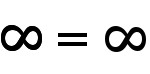
Unfortunately, we haven’t explained anything with this formula. It’s really no different than saying X=X. We’ve designated a symbol, a mathematical symbol no doubt, to represent everything and then simply claimed that it equals itself. If I were to state in English everything equals everything, you would no doubt agree, but still want to know what everything means or is. You would want an explanation, in other words. I’m still waiting for a demonstration of explanation of everything through mathematics. And I’ll wait forever, because not even God can explain everything through mathematics. To demonstrate this, let’s reduce the request from everything to a subset of everything: love for instance. Or laughter. Or the beauty of a sunset. Or music. Or to really be a philosophic pain, God himself. Any takers?
Secondly, the idea that coolness is a property of music was utilized to make and have fun, not to be a formal part of the argument. It worked, too. You go to Youtube and search for the worst musical memories of the past. It’s great fun. Nevertheless, I’m not certain it’s not an interesting argument. There’s certainly an objective correlation in the real world. Consider the following: the term cool is generally thought to have arisen in the 1930’s in conjunction with the American jazz scene. Though the specifics are arguable, the general historical fact is not. Thus, we have objective evidence of a term and a movement correlated with specific musical forms: jazz, blues, R&B, etc. This would tend to argue against the relativity of coolness, as CD has suggested. She’s within her rights to consider whatever she wants as cool, but to do so she’s relativising the definition of the term, not identifying a relativism inherent within the word itself, which has objective grounding within a historical context. Granted, there are a hundred factors at play within the historical context, so this is probably a book’s worth of study and not a blog argument.
We also have objective evidence of other musical forms that pre-existed jazz, blues, R&B, etc., for centuries. Fact is, classical music simply never engendered coolness as a movement. These guys understand that. But notice the interesting thing the guy on the left says at the 30 second mark: the interesting thing is that Luther has not changed the notes, just the rhythm’s a little different, so it’s exactly the way Bach wrote it, with a little swing to it..isn’t that nice?
The difference is obvious, even down to the foot tapping at the 145 mark, the dixieland blaring of the horns, the movements and body language of the horn players, and the runs at the end. Now, here’s the interesting thing, as mentioned in the video. The notes haven’t changed. If we insist on considering coolness as part of the argument from here on out, this probably represents the best launching pad from which to proceed.
Music is a sound. It’s the vibration of air particles at various frequencies and wavelengths. However, it’s not unordered, random sound, nor is it strictly repetitive sound, so its physics fail to sum it. It is a sound with intelligent design behind it. At the same time, it’s not a transmitter of specific information, such as the phrase, “this is cool.”
So, I’m in general agreement with this statement. I’d like to alter the word information, however. Music does in fact transmit mood; we may argue how specific this mood is, but it seems to me that mood is definitely transmitted by music, or, better stated, mood often occurs in the confluence of music and our perception of it. Consider the following two videos, not chosen for religious relevance, though the clip is one of the best:
Fast Tube by Casper
and…
Fast Tube by Casper
I know there are some extra variables involved and some significant differences between the two clips. But…did you feel the difference? Where does this difference arise from? Is it a property of the music itself? Do we as observers lend something to the music? Does God add something? This question should prove critical as we proceed. In fact, S>S seems to indicate so, in a very genteel and mannerly manner:
The ultimate question is one of that ineffable entity, beauty, and its presence in a world which, in its naturalistic quantifications, does not account for any such thing. However, I intend to demonstrate that to claim certain qualitative properties as essential to music is in fact a naturalistic expression…
With this in mind, let’s try another set. This time try to ignore the pictures. Actually, try closing your eyes…
Fast Tube by Casper
Sort of eerie, huh?
And this one (yes, I know you had to open your eyes for a moment):
Fast Tube by Casper
I’m going to assume we all acknowledge the difference in mood that occurs when we listen to different musics. So, the question is, why? I have three potential candidates that should represent a fair range of possibilities. If there’s another good candidate, let me know:
1. The mood is created by God in our minds according to some sort of occasionalism. I don’t expect to encounter any occasionalists, so let’s move on.
2. We as humans add something to the music itself through our perception of it. In some sense, this most assuredly must be the case, but will be able to account for the correlation of our moods so consistently to different types of music? We could posit cultural and learned influences, but it seems evident to me that people of all tribes and nations in all eras will not be dancing joyfully to the eerie clip above. I can’t prove that, but it seems intuitively the case, much more so than the notion that that clip could inspire frolicking, dancing, and joy. It’s the sort of thing we might attribute to devils.
And in the absence of any good reason to think there might exist a sane, rational, and sober human culture that would dance and frolic to morose, slow dirges and become saddened by upbeat, bright tunes played in major scales, option two does not seem plausible. [EDITOR’S NOTE: lawyers never ask questions they don’t know the answer to, and arguers never assert things they don’t know or believe strongly to be true. If I know CD, she’s got some weird culture socked away that does this very thing. Well, so be it…just some advice in case you’re engaged in a non-genteel, non-mannerly argument.] Note the weirdness that ensues when happy music is played behind videos of deranged clowns;–a staple of the horror flick–a sort of vertigo sets in. Why? Because it’s not natural. The music has been altered with conflicted visual cues that contradict what the music indicates by its essence.
3. There is an inherent property of music that is the best explanation for the phenomenon of mood. There is designed into the intervals, chords, scales, and I’d argue the rhythms, a property that affects us in certain ways, not much differently than the manner in which the wavelength of red strikes our perception. The flatted third and sixth (in context with the correct key, mind you) creates the minorish mood because it is minorish. The blue notes are blue notes because they were created that way; here they stand, they can do no other. It was created to be that way, and when we experience it properly, we act in accordance with God’s design for us.
Interestingly, there are mathematical expressions for intervals, chords, scales, and rhythms. The salient point is that the mathematics do not cause mood. Math is a descriptor of a physical reality created by God, much in the same way that red can be represented mathematically as a wavelength.
Now, we escape naturalism easily enough. God created music as it is to affect us as it does. No naturalistic dead-end there.
Another benefit of this view is that it answers the age-old question of which musics are good, and which musics are evil. Accordingly, none of them are evil. Even the eerie piece above seems to have an appropriate place in describing evil, say behind the story of Jesus’ temptation in the wilderness perhaps, or maybe for portions of Revelation. And, well, if there are pieces that are highly sexual, and there are, you can answer for yourself if there are appropriate places for those. What we know for sure is that they’re not proper in the teen-age Sunday meeting hall. It’s lyrics that do the dirty work, through specific information, if I may cite a top-notch blog. And, of course, our sinful application of the wrong musical forms to the wrong situations.
It seems to me, lastly, that option three indeed offers us the best avenue to a non-naturalistic view of music. If we add the mood through our perception, it may perhaps be accounted for by a quirk of our neural firing, or a merely human conception of the physical universe that is not quite adjusted correctly, though we would still face the consistency challenge. But if three is correct, and the property arises from within the intervals, it appears plausible that it be a property that is extra-physical; one that cannot be adequately accounted for by physical means. Non-specific information on the medium, so to speak…
At any rate, option three appears to be the most promising at first blush to me. Next time, let’s look at tone, that most beautiful and inexplicable property of music.







Excellent stuff, Marc. Excellent. :~) And laugh-out-loudable at the same time. In the best way, I mean.
The infinity point is admittedly of the same intent as the property of coolness argument was. (Quack.)
“The doctrine of ethos, or the moral qualities and effects of music, seems to be rooted in the Pythagorean view of music as a microcosm, a system of sound and rhythm ruled by the same mathematical laws that operate in the whole of the visible and invisible creation. Music, in this view, was not only a passive image of the orderly system of the universe; it was also a force that could affect the universe–hence the attribution of miracles to the legendary musicians of mythology. A later, more scientific age emphasized the effects of music on the will and thus on the character and conduct of human beings. How music worked on the will was explained by Aristotle through the doctrine of imitation. Music, he says, directly imitates (that is, represents) the passions or states of the soul–gentleness, anger, courage, temperance, and their opposites and other qualities; hence, when one listens to music that imitates a certain passion, he becomes imbued with the same passion; and if over a long time he habitually listens to the kind of music that rouses ignoble passions his whole character will be shaped to an ignoble form.”
Grout, Donald J. A History of Western Music, Third Ed. (pp. 7-8)
“The musical modes” says Aristotle, “differ essentially from one another, and those who hear them are differently affected by each. Some of them make men sad and grave, like the so-called Mixolydian; others enfeeble the mind, like the relaxed modes; another, again, produces a moderate and settled temper, which appears to be the peculiar effect of the Dorian; the Phrygian inspires enthusiasm.”
ibid. quoted from “Politics”
My memory is a thick fog, but I recall reading once (either in the cited book above or Aristotle perhaps or elsewhere) that the wealthy students (and not-so-wealthy, I imagine) of the Greeks studied/listened to a particular musical mode in preparation for their designated career. For example, those headed one day into the military studied and listened to (I think) the Phrygian mode. The reasoning behind the practice was that a particular musical mode would develop within a child the aspired-for temperament best suited for the vocation chosen for that child by their parents and/or family history.
“Melodies of expressive softness and indolence are to be avoided in the education of those who are being trained to become governors of the ideal state; for them, only the Dorian and Phrygian “tunes” are to be retained as promoting the virtues of courage and temperance respectively. Multiplicity of notes, complex scales, the blending of incongruous forms and rhythms, ensembles of unlike instruments, “many-stringed curiously-tuned instruments,” even aulos-makers and aulos-players [wind instruments], are to be excluded from the state. Furthermore, the foundations of music once established must not be changed, for lawlessness in art and education inevitably leads to license in manners and anarchy in society. For Plato the saying “Let me make the songs of a nation and I care not who makes its laws” would have expressed a political maxim; more than that, it would have been a pun, as the word nomos, with the general meaning of “custom” or “law,” was used also to designate the melodic patterns of a certain of lyric song. Aristotle, in the Politics (about 350 B.C.), is less explicit than Plato about the particular rhythms and modes, and also less severe. He allows the use of music for amusement and intellectual enjoyment as well as for education; but he agrees with Plato that all music used for educating the young should be regulated by law.”
I’ll stop now… 🙂
Shema, that’s fascinating stuff…It appears we’ve hit on a point of passion for you as well as for much of my immediate family. 🙂
[…] Scienda hostess, Girl LaFleur, has rarely had quite so much fun ever. Our faithful and true-hearted Quixote de la Mancha’s follow-up post is as eloquent as it is humourous; it deserves to be read, and read […]
Sorry to be so late to the discussion, but for me, the difficulty is in combining the action of producing music with the action of receiving music into the same quantitative model. Of course, music itself can be described, modeled, and predicted with math…but its relative reception cannot. No one can predict quantitatively how any piece will be received. Sure sad music will make one sad – but how sad? What memories, fears, regrets, will the listener experience consciously and subconsciously? For any given piece, what particular combination of biochemicals will be released internally…what effect will that particular combination have on the heart and limbs? As infinitely varied as human genetics, envirnoment, and experience is, so infinitely varied is their reaction to the measurable waves that enter their ears. So maybe infinity does work out to equal infinity.
Hey Scott,
Great to have you by, and thanks for commenting. How’s the album coming?
Thanks for asking, Marc. Going through vocalists like water through a screen door (?…yes, even I am surprised that one was so bad). Anyway, I’ve got a guy that’s hopefully it…more of a Don Henley kind of vibe. We’re in the studio tomorrow, Friday, and Saturday, then final mixing the week of July 26th. I’ve got my fingers crossed.
Other news: just accepted a job offer from IBM and will moving to Dallas in August, so we’ll be a little closer. Love to have the opportunity to hang out more often.
The 26th is right around the corner. Best wishes…. Here’s hoping big blue treats you well. Let me know when you make the move to North Houston…
“So maybe infinity does work out to equal infinity.”
Thank you for that take on it, Scott. Its reception is pleasant on this end. 🙂 Any friend of a Schooley is a friend of mine, especially a musician.
Thanks for the response, C.L.
Mark, I’ll be in “North Houston,” and a Yankee, beginning Aug. 6th.