
Three cheers for my web/blog designer. Her skill is evident, the site is striking, and a link is provided along the right hand side of this blog for anyone who wishes to contact her. My initial impression of this site was favorable, and it has only increased since. Nevertheless, I cringed when I first beheld the prominent blood spatter on the header. A Christian blog with such a potentially morbid theme conspicuously displayed?
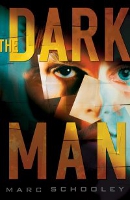
For the squeamish among us, The Dark Man is not a bloody book, nor is it gratuitously violent. Those of a sensitive constitution should have no trouble reading and enjoying it. What blood is in the book is mostly found in the opening chapter, which may be previewed at www.marcherlordpress.com
However, let’s call it like it is: the Bible is an extremely bloody book. There’s no sense in denying this readily apparent observation. It’s replete with violence to the degree that I don’t need to support this naked assertion with citations. A moment or two of honest reflection from anyone who has read it is all that’s required. Come on, admit it, my fellow Christians….
Perhaps, then, blood is not a foreign element to a Christian site. In fact, I intend to argue that blood is a central element of the Christian faith, and I intend to argue that we as Christians should embrace the elements of our religion, rather from retreating from them. This should, God willing, be the first in a series of posts encouraging Christians to refrain from denying the tenets of our faith that currently swim against the stream of prevailing culture. Twentieth century theology, and Christian thought in general during that period, has largely aimed its efforts at the exact opposite target, in a wrongheaded attempt to make Christianity compatible with culture. This practice must end, not only because it’s disastrous for the church, but because hath not God said “Thou shalt not lie?”
And the attempt to persuade the skeptic, the objector, another Christian, yourself, or anyone else that the Bible is not a violent or bloody book is simply that: a lie, or at best an unconscious deceit borne of a desire to protect God. This mealy-mouthedness has got to end. It’s no news flash that God as revealed in the Bible is able to defend himself, and that He requires His followers to be truth tellers. Therefore, it’s time to revert to a time when Christians embosomed their beliefs–Christianity in its brashest supernatural form as delineated in Scripture–or abandon it altogether.Why, then, would some attempt to conceal the fact that the Bible relates account after account of violence and bloodshed? I think there’s several reasons, none of which are satisfactory.
The zeitgeist, or spirit of the age, in which we find ourselves is constantly preaching that the world is progressing toward some rational utopia in which an enlightened humanity basks in an Edenic paradise ushered in through technology, science, education, and economics. Mankind shall overcome his baser instinct, and presumably the drive of natural selection. As your own poets have said, “Come on people now, smile on your brother, everybody get together try to love one another right now,” or, “You may say I’m a dreamer, but I’m not the only one. I hope someday you’ll join us. And the world will live as one.” It’s a noble sentiment, to be sure, and one we should all strive toward.
In this context, the Bible is conceived of as a relic of past generations mired in war, hatred, bloodshed, and violence–an unenlightened, savage, Bronze aged, beastly humanity. Many Christians react to the weight of this accusation by denying the Bible’s violence, or by softening its depiction of violence through a sharp contrast between the Old and New Testaments, as if He who has no shadow of turning, suddenly turned. This simply will not do. The Bible unequivocally declares from beginning to end that mankind has a sin problem. The violence contained throughout the Bible is an honest reporting of Man’s nature. It would be ridiculous if the Bible posited man’s sinful nature and then reported nothing but good things about him, or glossed over his horrid comportment. It would be as if a 20th century history reported the moon landing, the cure for polio, and Habitat for Humanity without reference to the Holocaust, WWII, WWI, and Serbian genocide.
I propose that we work for good, let the chips fall where they may, and embrace the outcome. It appears we have somewhat of an objective, measurable criterion on our hands that discriminates between Christianity and other thought forms. At any rate, the revulsion I suspect many may feel at this article is a prime indicator of just how much the spirit of the age has inculcated our thinking, convincing us that the world’s a rosy place where nothing bad is ever supposed to happen. If you’re repulsed at me, all I can say is look around you. The world today looks no different than that portrayed in the Bible. We’ve got to deal with what is, not what we dream. Fairy tales belong in the nursery.
Secondly, I suppose that many well-meaning Christians desire to defend God. In their view, the Bible’s depiction of violence somehow mars the good name of God. Their God could never order the conquest of Canaan, take human life through a flood, gamble with Job’s welfare, subject Joseph and the Israelites to slavery, approve of Sisera’s head being nailed to the ground with a spike, strike down Uzzah, or a hundred of other like claims, although no Christian appears expeditious in denying perhaps the most violent act in the entirety of Scripture: the crucifixion. These Christians deny in some form or fashion the biblical accounts, or attempt to ameliorate God’s connection with them. This genre of blood denial will require a separate post to treat, but in the end, even a cursory perusal of scripture reveals that God is intimately involved in all the actions above. Denying them is tantamount to denying the Bible itself, or at best the inerrancy of Scripture. Both are unacceptable, in my view, because the text plainly declares what it declares. Acceptance or rejection appear the only viable, rational options.
A third difficulty presents itself within Christianity, and is of little interest to non-Christians. Many who name the name of Christ deny the Biblical portrait of God simply because He’s not their God. These are the “my God is a God of love and wouldn’t judge anyone” folks who distort the Biblical descriptions of God to suit their own preconceptions. Other forms of this heresy are the bellhop god who does whatever you ask of him, and the hand-wringing god who’s incapable of doing most things the Bible claims He does.
But isn’t blood central to the Christian faith? It’s central to saving faith, from the types and shadows offered through animal sacrifice to the once and for all efficacious sacrifice offered by the unblemished Christ on the cross. It’s central to the communion of the saints: Do this in remembrance of me. He who will not partake of his body and blood has no place in Him. It’s central in the blood of the martyrs that watered the seeds of the Church. It’s central in the establishment of covenants. It’s central to the earliest chapters of Genesis where Abel’s blood cries out from the ground, to the end of Revelation where the rider on the white horse is dressed in a robe dipped in blood. It’s central to atonement, justification, redemption, reconciliation, and adoption. It’s central because, according to Scripture, the life’s in the blood. And despite what the spirit of the age claims, it’s central in judgment. For you know that it was not with perishable things such as silver or gold that you were redeemed from the empty way of life handed down to you from your forefathers, but with the precious blood of Christ, a lamb without blemish or defect. 1 Pet 1:18-19
There’s no way around it. Either we fully embrace the Bible’s claims, or we deny them and abandon the faith. But let’s not make excuses, be mealy-mouthed, or deny that 1+1=2. Wrestle with God like Jacob, or sell your birthright like Esau. In subsequent posts, I’ll grapple with these accounts, in order that we might wrestle.





Hi! Congratulations and best wishes on your new novel. I found your blog via the Marcher Lord Press site. Looks like a fascinating story.
Hello Janet!
Thanks for dropping by, and thanks for the encouragement. You are most welcome here anytime.
Obviously, I like the story and I’m hoping you will as well, but don’t feel like you have to wait until April to drop back by.
Amen. I look forward to your subsequent post on the topic.
Thanks Karla,
This should be followed up with several subsequent posts, everything from God & genocide to hell, the point being that the Bible is a book that approaches the world with all its evil head-on, without excuse, and so should we. I’ve yet to encounter any persuasive reason to be ashamed of what the Bible teaches and records, and from what I’ve gathered, neither have you.
Thanks for dropping by.