Revelation 3:20 & the Top Ten List of Most Frequently Misinterpreted Bible Verses

The following is one of Shema’s entries for the top ten list of most misinterpreted Bible verses/passages. I think it’s a good one. Note: the list is a work in progress: no decisions have been made, nor any votes cast.

Interpretational error category: context

Here’s how things go awry. First, take a loook at this well loved, and oft-quoted verse extracted from its context: Here I am! I stand at the door and knock. If anyone hears my voice and opens the door, I will come in and eat with him, and he with me. Rev 3:20

Pretty straightforward, right? This is an evangelist’s staple whereby Christ is knocking at the world’s door and inviting everyone and anyone to eat with him, correct?  What else could anyone mean?

Before proceeding, I’d like to offer a clarification, if you don’t mind. I believe that without qualification the statement If anyone hears my voice and opens the door, I will come in and eat with him, and he with me is unreservedly true. Whosoever believes in Christ, whosoever hears his voice and opens the door, will eat with Christ and be saved.

However, that’s a truth gathered from other portions of Scripture, not this one. Take a second look at the verse, this time surrounded by its immediate context:

“To the angel of the church in Laodicea write:
These are the words of the Amen, the faithful and true witness, the ruler of God’s creation. I know your deeds, that you are neither cold nor hot. I wish you were either one or the other! So, because you are lukewarm—neither hot nor cold—I am about to spit you out of my mouth. You say, ‘I am rich; I have acquired wealth and do not need a thing.’ But you do not realize that you are wretched, pitiful, poor, blind and naked. I counsel you to buy from me gold refined in the fire, so you can become rich; and white clothes to wear, so you can cover your shameful nakedness; and salve to put on your eyes, so you can see. Those whom I love I rebuke and discipline. So be earnest, and repent. Here I am! I stand at the door and knock. If anyone hears my voice and opens the door, I will come in and eat with him, and he with me. To him who overcomes, I will give the right to sit with me on my throne, just as I overcame and sat down with my Father on his throne. He who has an ear, let him hear what the Spirit says to the churches.” Rev 3:14-22

Our contextual cues here seem fairly apparent. This passage is addressed to the angel of the church of Laodicea. The Greek word translated angel is ἀγγέλῳ, which means messenger, and has been interpreted various ways, none of which are important to the question at hand. What is important, though, is the connection to chapter one of Revelation:

I turned around to see the voice that was speaking to me. And when I turned I saw seven golden lampstands, and among the lampstands was someone “like a son of man,” dressed in a robe reaching down to his feet and with a golden sash around his chest. His head and hair were white like wool, as white as snow, and his eyes were like blazing fire. His feet were like bronze glowing in a furnace, and his voice was like the sound of rushing waters. In his right hand he held seven stars, and out of his mouth came a sharp double-edged sword. His face was like the sun shining in all its brilliance.

When I saw him, I fell at his feet as though dead. Then he placed his right hand on me and said: “Do not be afraid. I am the First and the Last. I am the Living One; I was dead, and behold I am alive for ever and ever! And I hold the keys of death and Hades.

“Write, therefore, what you have seen, what is now and what will take place later. The mystery of the seven stars that you saw in my right hand and of the seven golden lampstands is this: The seven stars are the angels of the seven churches, and the seven lampstands are the seven churches. Rev 1:12-20

It’s clear that the apostle John is addressing our passage to the messenger of the church of Laodicea, who is clearly in the hand of Christ according to the text, not flung out to the nether regions of the earth, or positionally outside of the kingdom. The remaining contextual cues from chapter one leave no doubt that the book of Revelation in its entirety is written to the seven churches, those that existed historically at that time:

On the Lord’s Day I was in the Spirit, and I heard behind me a loud voice like a trumpet, which said: “Write on a scroll what you see and send it to the seven churches: to Ephesus, Smyrna, Pergamum, Thyatira, Sardis, Philadelphia and Laodicea.”  Rev 1:10-11

John,
      To the seven churches in the province of Asia:  Rev 1:4

This much should be reasonably non-controversial. Nevertheless, notice what follows Rev 1:4:

Grace and peace to you from him who is, and who was, and who is to come, and from the seven spirits before his throne, and from Jesus Christ, who is the faithful witness, the firstborn from the dead, and the ruler of the kings of the earth. To him who loves us and has freed us from our sins by his blood, and has made us to be a kingdom and priests to serve his God and Father—to him be glory and power for ever and ever! Amen. Rev1:4b-6

Now, when you write a letter, don’t you customarily begin with Dear Mrs. Smith or To whom it may concern? More than likely, I’d guess. The intent is to let the reader know first and foremost for whom the letter is intended. Thankfully, the biblical writers practiced the same protocol when writing. Check out the greetings and salutations of the New Testament epistles; they’re a key to proper biblical interpretation. Revelation is no different in this regard in that Revelation is written to the seven churches and to those in them that Christ loves, who have been freed from sins by his blood, and made to be a kingdom and priests to serve God his Father.

With that in mind, let’s look back at chapter three. Christ says to the church at Laodicea through its messenger “Those whom I love I rebuke and discipline. So be earnest, and repent.” Who is it that Christ loves, rebukes, and disciplines? Those who have been freed from sins by his blood, and made to be a kingdom and priests to serve God his Father, no doubt.  It’s the Christians in Laodicea who he describes in the following manner:

I know your deeds, that you are neither cold nor hot. I wish you were either one or the other! So, because you are lukewarm—neither hot nor cold—I am about to spit you out of my mouth. You say, ‘I am rich; I have acquired wealth and do not need a thing.’ But you do not realize that you are wretched, pitiful, poor, blind and naked. I counsel you to buy from me gold refined in the fire, so you can become rich; and white clothes to wear, so you can cover your shameful nakedness; and salve to put on your eyes, so you can see.

Notice the contrast: I am about to spit you out of my mouth yet Those whom I love I rebuke and discipline. Certainly, those who are in Christ’s mouth, metaphorically, are those he holds; those he has saved and loves. What a beautiful verse of the preserving promise and power of Christ through his Holy Spirit we have here. What great comfort we have in knowing that Christ stands at the door of our hearts knocking, because he loves us, and intends to rebuke and discipline us, we Christians, when we are lukewarm. What assurance there is in a faithful savior.

He is among the golden lampstands, after all, and he does hold the keys of death and Hades. And we also know that his Father is greater than all, and none can snatch out from his hand. He stands at the door of your heart, Christian, and knocks, always remembering that he now has the resurrected ability to pass through locked doors when necessary. There are other passages to offer to the world than this one; this promise is for you. It’s time to open up and overcome.

He who has an ear, let him hear what the Spirit says to the churches…

Marcher Lord Press Release

There are interesting and exciting new things going on over at Marcher Lord Press. Here’s the latest press release:

October 18, 2009
FOR IMMEDIATE RELEASE

Marcher Lord Press Announces Marcher Lord Select

(Colorado Springs, CO)–Marcher Lord Press, the premier publisher of Christian speculative fiction, today announces the debut of a revolution in fiction acquisitions.

“Marcher Lord Select is American Idol meets book acquisitions,” says publisher Jeff Gerke. “We’re presenting upwards of 40 completed manuscripts and letting ‘the people’ decide which one should be published.”

The contest will proceed in phases, Gerke explains, in each subsequent round of which the voters will receive larger glimpses of the competing manuscripts.

The first phase will consist of no more than the book’s title, genre, length, a 20-word premise, and a 100-word back cover copy teaser blurb. Voters will cut the entries from 40 to 20 based on these items alone.

“We want to show authors that getting published involves more than simply writing a great novel,” Gerke says. “There are marketing skills to be developed–and you’ve got to hook the reader with a good premise.”

Following rounds will provide voters with a 1-page synopsis, the first 500 words of the book, the first 30 pages of the book, and, in the final round, the first 60 pages of the book.

The manuscript receiving the most votes in the final round will be published by Marcher Lord Press in its Spring 2010 release list.

No portion of any contestant’s mss. will be posted online, as MLP works to preserve the non-publication status of all contestants and entries.

Participating entrants have been contacted personally by Marcher Lord Press and are included in Marcher Lord Select by invitation only.

“We’re also running a secondary contest,” Gerke says. “The ‘premise contest’ is for those authors who have completed a Christian speculative fiction manuscript that fits within MLP guidelines and who have submitted their proposals to me through the Marcher Lord Press acquisitions portal before October 29, 2009.”

The premise contest will allow voters to select the books that sound the best based on a 20-word premise, a 100-word back cover copy teaser blurb, and (possibly) the first 500 words of the book.

The premise contest entrants receiving the top three vote totals will receive priority acquisitions reading by MLP publisher Jeff Gerke.

“It’s a way for virtually everyone to play, even those folks who didn’t receive an invitation to compete in the primary Marcher Lord Select contest.”

Marcher Lord Select officially begins on November 1, 2009, and runs until completion in January or February 2010. All voting and discussions and Marcher Lord Select activities will take place at The Anomaly forums in the Marcher Lord Select subforum. Free registration is required.

“In order for this to work as we’re envisioning,” Gerke says, “we need lots and lots of voters. So even if you’re not a fan of Christian science fiction or fantasy, I’m sure you love letting your voice be heard about what constitutes good Christian fiction. So come on out and join the fun!”

Marcher Lord Press is a Colorado Springs-based independent publisher producing Christian speculative fiction exclusively. MLP was launched in fall of 2008 and is privately owned. Contact: Jeff Gerke; www.marcherlordpress.com.

Kaleidoscopes and Dark Men

Those born into the digital age may wish to learn about kaleidoscopes before proceeding…

There’s something about the image of a kaleidoscope that intrigues me. It’s not what I see in the kaleidoscope; it’s the kaleidoscope-ness that captivates me. It has ever since I heard of the girl with kaleidoscope eyes.

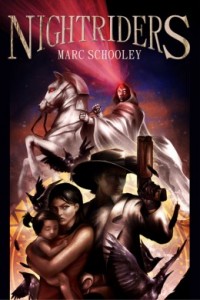
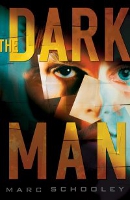
I believe I utilized kaleidoscope imagery in The Dark Man. It was extremely brief, maybe just a quick reference or word picture, but I could not resist the pull of the image, if only for a moment. Look for it, keep an eye out for it, and if you haven’t read The Dark Man, go to Amazon and order it. You’ll be happy you did…oh yeah, my publisher will admonish me if I neglect to mention that The Dark Man features attack gunship helicopters and loads of action in addition to its deep theological themes and kaleidoscope-like imagery.

The Kaleidoscope image fascinates me because of its total and continuous becoming, given that someone continues to turn it, of course. This shifting, this morphing, this you never step into the same river twice: it’s contingency at large and on the move. It has little or nothing to do with the colors involved. It’s the shape shifting, the image of a world with constant blending of substances and their properties into new substances and properties that give way to yet more S & P.

In case I’ve lost you, let me shout real loud: ATTACK GUNSHIP HELICOPTERS & ACTION. Okay, now that you’re interested again, let me approach my point. If you stare into a kaleidoscope long enough, you can forget that you’re actually turning the lens that changes the colors. When this occurs, there’s a point in time where, unconsciously, your mind has lost the sense that all is not becoming. Under the entrancement of the colors, your mind may forget that there’s someone–in this case yourself–turning the kaleidoscope.

We’ve all had similar experiences: the movie that was so good we forgot where we were, the sunset we got caught up in, the musical score that transported us to another place. Sometimes, and most of them are good times, we forget that we are conscious.

The kaleidoscope phenomenon is a forced, or enticed, event that mirrors our greater lives. I would argue that a substantial portion of our waking life is spent in this conscious yet unconscious state. We are caught up in the hue and cry of life, or the doldrums of life, and forget that we are actually thinking, conscious beings. In effect, we forget to think that we are thinking.

Have you ever asked yourself why something exists rather than nothing? Try it again if you have, or for the first time if you have not. Very quickly, you’ll notice that all of a sudden you are thinking of your own existence, as well as the existence of everything else. It’s a staggering thought with miles of untrod, virgin ground; yet I ask you to think of it now as a reminder of just how often you don’t think of it. Mostly, we spend our lives lapsed in a state of unconscious, assumed existence, as if we were entranced by a kaleidoscope.

Through the kaleidoscope of the natural world, we observe constantly changing frames and colors: the sunsets, the stars, the full moons, the forests, the events of our lives, the pain of injury, and the love of friends. And, no doubt, all these things we see are in a state of becoming. The flowers fade, the grass withers, we grow old, and those yet to come are born. But how often do we forget that the colors of the kaleidoscope are not all there is?

Most importantly, when we are entranced, we forget that someone is turning the kaleidoscope. Our lives can lull us into the false perception that all is becoming–that there is no being–that this world of becoming is all there is. In this, we are but dark men traversing a dark world, oblivious to the light that shines through the pane of the kaleidoscope. The world around us is indeed turning, but it does not turn of its own accord or power. There is indeed someone with His hands on the kaleidoscope of the world. He is the one that is not becoming, but Being.

The grass withereth, the flower fadeth: but the word of our God shall stand for ever.

In the beginning was the Word, and the Word was with God, and the Word was God. He was with God in the beginning. Through him all things were made; without him nothing was made that has been made. In him was life, and that life was the light of men. The light shines in the darkness, but the darkness has not understood it.

There came a man who was sent from God; his name was John. He came as a witness to testify concerning that light, so that through him all men might believe. He himself was not the light; he came only as a witness to the light. The true light that gives light to every man was coming into the world.

He was in the world, and though the world was made through him, the world did not recognize him. He came to that which was his own, but his own did not receive him. Yet to all who received him, to those who believed in his name, he gave the right to become children of God— children born not of natural descent, nor of human decision or a husband’s will, but born of God.

Every good and perfect gift is from above, coming down from the Father of the heavenly lights, who does not change like shifting shadows.