Author of The Dark Man, available from Marcher Lord Press
Random header image... Refresh for more!

Posts from — March 2009

Marcher Lord Press, 4/1/09 release

by20darkness20hid-original-smaller2

Here’s another of my fellow MLP authors: Jill Williamson. There’s some outstanding reviews of her book, By Darkness Hid, out there. This is one of them:

“I love a good fantasy, and By Darkness Hid more than fills the bill. With an unpredictable plot, twists of supernatural ability, and finely crafted tension between the forces of good and evil, Jill Williamson’s book had me captivated. I jumped into the skin of the heroine and enjoyed her journey as if it were my own.”


–Donita K. Paul, author of the Dragon Keeper Chronicles: DragonSpell, DragonQuest, DragonKnight, DragonFire, and DragonLight.


 You can meet Jill, and read sample chapters of her book By Darkness Hid, at the following link: http://www.marcherlordpress.com/Jill%20Williamson.htm

March 29, 2009   No Comments

Marcher Lord Press: 4/1/09 release

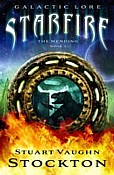
starfire-original-revised-smaller

I’m honored to be grouped with two other Marcher Lord Press novelists for the second MLP release, scheduled for Wednesday, 4/1/09. Here are the opening lines from Stuart Stockton’s new release, Starfire:

In the time of the mending, when the broken paths become whole again, one saurn shall rise out of his place. Unto this saurn shall be given the fate of the mending. He shall destroy the eye and reap a time of blessings and joy, or he shall call down the fire of the stars and sow war and sorrow upon the paths.

Stuart Vaughn Stockton is a Web designer for Cook Communications in Colorado Springs. He is a well-known author among the ACFW crowd, thanks in part to the fact that Christian novelist Brandilyn Collins based a popular character in her Kanner Lake series on Stuart! She needed an aspiring novelist working on a bizarre science fiction, and Stuart’s non-human, non-earth novel in progress (Starfire) fit the bill.

Meet Stuart, and read the first chapters of Starfire, at the following link: http://www.marcherlordpress.com/Stuart%20Stockton.htm

March 28, 2009   No Comments

Proper Biblical Interpretation: Episode 1–Isaiah 45:7

A misunderstanding common to non-Christians and Christians alike is the notion that the Bible may be interpreted to support any claim or opinion at hand: a kaleidoscope of words revolved magically by an individual interpreter into any pattern desired. Literally, it is true that this indeed occurs–the theological universe is littered with lifeless and nonsensical interpretations drawn from the Biblical text.

Does this leave us with a cacophony of equally valid interpretations? Are Biblical interpretations simply schoolyard yes it is, no it’s not disputes?

Well, no. Biblical interpretation is generally not that mysterious, and the reasons for the wealth of varied opinion regarding what the text actually says need to be sought after elsewhere. This is the first post in a series of posts dedicated to proper interpretation, and though I don’t intend to address the question today, as we move along, it should become clear why we have thousands of denominations and interpretations.

A good place to begin in this series is this oft-maligned verse from Isaiah:

I form the light, and create darkness: I make peace, and create evil: I the Lord do all these things. (Isaiah 45:7, KJV)

The Bible makes the claim that God is not the author of evil, as does Christian doctrine; so, as the story goes, we have a genuine contradiction on our hands. It’s not surprising, then, that later translations of the Bible alter the wording of this verse:

I form the light and create darkness, I bring prosperity and create disaster; I, the Lord, do all these things. (NIV)

Which translation is correct? Is there an objective method with which to determine the author’s intent in this passage?

Both, and yes.

Language evolves. King James English is now 400 years old, and the word evil carried with it additional meanings not commonly utilized in the 21st century, namely as calamity or disaster. This is readily apparent and does not seem to require further defense. It could just be that both translations are correct, taken within the linguistic contexts in which they were written. Nevertheless, a cursory glance at the KJV will reveal some uses of the same Hebrew word, ra, in various place where the intent is obviously disaster or calamity, rather than evil proper, as translated by later versions:

The Lord hath made all things for himself: yea, even the wicked for the day of evil. (Pr 16:4, KJV)

I’m not completely satisfied, though, and I’m sure many skeptics would not be either. Moreover, our larger question remains untreated. Are there objective means available to determine what Isaiah is trying to say here?

Let’s take a closer look. It perhaps might be asserted that the Hebrew word ra is found in other Old Testament texts where the meaning is quite clearly evil proper. This assertion is beyond question:

Gen 3:22–And the Lord god said, Behold, the man is become as one of us, to know good and evil…

Hordes of verses could be marshaled in support ra meaning evil proper. Does it follow logically, then, that ra is best interpreted as evil in Isaiah 45:7? Of course not, and any suggestion that it does logically follow is nonsense. First, any Hebrew concordance will list several meanings for ra, and list the various translations possible for the word. One example to add to the proverbs 16:4 citation above will suffice to demonstrate that ra does not always designate evil proper:

And he asked Pharaoh’s officers that were with him in the ward of his lord’s house, saying, Wherefore look ye so sadly today? (Gen 40:7)

In fact, any standard concordance will list multiple nuances in meaning for this word. For reference, follow this link: http://www.blueletterbible.org/lang/lexicon/Lexicon.cfm?Strongs=H7451&t=KJV&cscs=Isa*

Thus, a simple word Hebrew word search is inadequate to help us arrive at the proper meaning of ra in Isaiah 45:7. Fortunately, two tried and true principles are available to us that remove any and all doubt about what Isaiah meant, not in accordance with our pet theories or interpretations of what he meant, but pursuant to an objective standard that would compel any and all rational observers to arrive at the same conclusion.

The first is context. Isaiah begins chapter 45 with these words: “This is what the Lord says to his anointed, to Cyrus, whose right hand I take hold of to subdue nations before him…For the sake of my servant Jacob, of Israel my chosen, I summon you by name and bestow on you a title of honor, though you do not acknowledge me.” It’s evident, then, that the “evil” God is creating in verse seven is better understood as calamity or disaster. It’s a description of the judgment of God on his people achieved through Cyrus.

This should be enough to convince both skeptic and believer alike that what Isaiah means in verse 7 is best understood by us as calamity or disaster. For the stubborn, however, there’s further, undeniable proof that God does not create evil according to Isaiah 45:7. In addition to context, it is important to recognize literary features of a text when they are present. Failure to do so leads to error in interpretation. Applicable to Isaiah 45:7 is a particular Hebrew construction known as parallelism.

There are several types of parallelism employed by Old Testament authors: synonymous, antithetical, synthetical, stairstep, and emblematic. Isaiah 45:7 is as clear an example of antithetical parallelism as can be found in the OT; without recognizing this fact, it is easy to make the basic error of claiming Isaiah states that God creates evil. Antithetical parallelism describes a relationship between opposites or contrasts. For instance, consider Proverbs 10:16, or any of several other proverbs in chapter 10: “The labour of the righteous tendeth to life; the fruit of the wicked to sin.”

This is precisely what occurs in Isaiah 45:7: “I make peace, and create evil.” What is the opposite of peace? Calamity, turmoil, disaster, war–similar to what might be delivered by Cyrus–but certainly not evil proper. Hence, the verse is properly translated in modern language as “I form the light and create darkness, I bring prosperity and create disaster; I, the Lord, do all these things.” Note the antithetical structure: light/darkness, prosperity/disaster.

To claim, then, that God creates evil on the basis of Isaiah 45:7 is simply the result of improper Biblical handling, and the equivocation that results from conflation of modern English with 400 year-old KJV English. Despite rumors to the contrary, Biblical interpretation is really not all that nebulous in the overwhelming majorty of cases.

*Blue Letter Bible. “Dictionary and Word Search for ra` (Strong’s 7451)“. Blue Letter Bible. 1996-2009. 23 Mar 2009.


March 22, 2009   6 Comments

Chimp, Chump, or Other…

I’ve encountered a fair amount of chatter lately regarding higher primates and their kinship with humanity—not the standard evolutionary fare, but more along the lines of higher primate morality. The chatterers by and large embrace the naturalistic evolutionary paradigm in its full rigor, and consider it a fact demonstrated beyond question that morality is a product of natural processes, and natural processes alone.


What caught my attention was a particular discussion directed at chimpanzee behavior: tool use, conception of future states, and social mores, among other things. The chatterers seemed cyber-spatially prostrate in homage and obeisance to two spirits of the age: the “just so” evolutionary tale, and the virtual, if restricted, similitude between humans and higher primates.


As reported by naturalists, then, morality is merely a human conception, a societal by-product of blind evolutionary forces; one that we share to a limited degree with higher primates. End of story, get over it, move on, say the chatterers.


Given the truth of the standard, naturalist paradigm, we may or may not accept that morality developed precisely as claimed, but what we must adopt, if we wish to be rational, is that morality is as claimed: relative, merely human, non-absolute. If this is true—and I am convinced that it is not—those who believe it appear not to believe it with enough conviction to live it.


As I have stated elsewhere, philosophies hatched in captivity do not so easily survive in the wild. Talk is cheap, especially internet talk, my friends: do those who preach such a conception of morality actually practice what they preach? I think not.


A horrid event recently befell a woman who was mauled by a chimpanzee. My heart goes out to her, and nothing said here diminishes or trivializes her pain. As should be plain at the end of this post, it is actually I as non-relativist, and those like me—which is ultimately all of us—who can empathize with this woman who was wronged in a very real and strikingly tangible manner.


For those, then, preaching that higher primates evolved morality, how can we determine that anything wrong or evil actually occurred here? Certainly no one blames the chimpanzee, even though he recompensed for the deed with his life with bullets in his chest. There’s no chimpanzee court, no chimp penal institutions, no primate rehabilitation facilities. In fact, in the wild, there’s not even the thought, presumably, that any wrong or evil occurs in such instances. Indeed, we would predict this under naturalistic evolution: survival, fitness, reproduction, natural selection, but certainly not evil.


To suggest that evolutionary thought denies this by some sort of standard whereby societies evolve moralities to sustain their genetic pools is just to move the difficulty back a step. Even if this were the case, and it’s nowhere near clear that this evolutionary “just so” state of affairs obtains, there would still exist the identical proposition between societies and their respective gene pools. Better to maul the other society first: maul or be mauled, but reproduce and have your children reproduce no matter what the means.


One might conclude that this underlies the inchoate humanistic mantra for the brotherhood of man and the kinship of all living things: to salve the uncomfortable naturalistic, evolutionary logical conclusion that nothing is wrong in the struggle of life, and the all-encompassing drive to protect and sustain our DNA. Yet this, again, is only a further removal of the problem back a step. For then it would still be our planetary gene pool versus that of competing civilizations elsewhere. Perhaps we should begin singing about galactic, or even universal, peace, love, and understanding.


Nevertheless, in the human realm the idea that nothing wrong occurred with the chimp mauling certainly does not appear to be the case. The hue and cry is deafening. What a horrid event. What a crime. What an evil. And guess what—the hue and cry is right. Something wrong did in fact occur, namely that the chimp’s owner was apparently negligent. It wasn’t an act against human convention. It wasn’t an act against sensibilities. This horrid event was more than an act against a social contract. It was wrong. And those who preach that morality is merely a human convention know it was wrong. Relativism, most particularly naturalist varieties of relativism, is an academic philosophy that cannot survive in the wild.


Now, suppose, for a moment, that another human had mauled this woman instead of a chimpanzee. Here we have a fatal defeater for naturalistic morality: if we are but members of the same evolutionary family with our higher primate cousins and our morality is merely evolved, merely a human conception, then there’s no substantive difference in a chimp mauling and a human mauling.


Again, my heart goes out not only to this particular woman, but all who have experienced pain and suffering. And the thing is, when I make that claim, it actually means something—because morality is more than a human convention.


If you believe there’s not an objective standard of goodness and morality out there, independent of humanity, you’re in effect saying you’re nothing more than a chimp. If you believe there’s not, but act as though there were, you’re a chump (although I thank you for doing so. It makes my time on this earth more pleasant). But there’s another option other than chimp or chump: morality is somehow more real than you’re currently willing to admit. It’s okay, take the plunge: fact is, you’re already living as though it were true.

March 14, 2009   7 Comments

As some of your own poets have said, episode 1

Percy Bysshe Shelley’s masterpiece, Ozymandias, is an essential. And with salute to the upcoming Watchmen release, I encourage you to take a moment and read Shelley’s sonnet if you haven’t previously, or reacquaint yourself if you have:

I met a traveller from an antique land
Who said: Two vast and trunkless legs of stone
Stand in the desert. Near them on the sand,
Half sunk, a shatter’d visage lies, whose frown
And wrinkled lip and sneer of cold command
Tell that its sculptor well those passions read
Which yet survive, stamp’d on these lifeless things,
The hand that mock’d them and the heart that fed.
And on the pedestal these words appear:
“My name is Ozymandias, king of kings:
Look on my works, ye Mighty, and despair!”
Nothing beside remains: round the decay
Of that colossal wreck, boundless and bare,
The lone and level sands stretch far away.

If you can read this poem and remain unmoved, your heart is hewn from the same stone Of that colossal wreck. The imagery of this poem haunts me: the wasteland stretching far and away, the windswept sand battering the shatter’d visage, the vanity of power, nature’s and time’s ultimate conquest over human folly, and the emptiness of existence.

And on the pedestal these words appear: “My name is Ozymandias, king of kings: Look on my works, ye Mighty, and despair!” How many rulers throughout the ages have echoed this sentiment? How many of the influential, the wealthy, the powerful? Who’s not felt the “proud man’s contumely?” On a lesser scale, does not this sentiment even crop up within your small set? Within your family perhaps? Your church? Your place of employment?

Meaningless! Meaningless! said the preacher. And he was right. How our works suppurate and decay with the onslaught of unfettered time, works of we, the present unknowns, most of all. Yet how many Pharaohs of Egypt can you name? Chinese Dynastics? I wager few within our own present culture are able to name all American Presidents, much less the most powerful and influential men and women of times long past.

Sobering, indeed, and crippling when Shelley’s boundless and bare vision adds a desolate texture to our human predicament: as some of your own poets have said: we are alone. We are meaningless. We are purposeless. We are absurd.

Without God, that is. Then I saw a new heaven and a new earth, for the first heaven and the first earth had passed away, and there was no longer any sea. I saw the Holy city, the new Jerusalem, coming down out of heaven from God, prepared as a bride beautifully dressed for her husband. And I heard a loud voice from the throne saying, “Now the dwelling of God is with men, and he will live with them. They will be his people, and God himself will be with them and be their God. He will wipe every tear from their eyes. There will be no more death or mourning or crying or pain, for the old order of things has passed away.

He who was seated on the throne said, “I am making everything new!” Then he said, “Write this down, for these words are trustworthy and true.”

He said to me: “It is done. I am the Alpha and Omega, the Beginning and the End. To him who is thirsty I will give to drink without cost from the spring of the water of life. He who overcomes will inherit all of this, and I will be his God and he will be my son.

March 3, 2009   No Comments

Mission Impolitical

Then Jesus came to them and said, All authority in heaven and on earth has been given to me. Therefore go and make disciples of all nations, baptizing them in the name of the Father and of the Son and of the Holy Spirit, and teaching them to obey everything I have commanded you. And surely I am with you always, to the very end of the age. Matt 28:18-20

Arguments from silence are typically weak; they’re best to be avoided when possible. To move from the Great Commission to a conclusion that the Church’s mission does not include politics borders on such an argument, which is to say that because Jesus did not teach his disciples to be involved in politics, then He must have been against it.

On closer inspection, however, I think something approximating this conclusion may be maintained. Christ gives three instructions here for his disciples:

  • Go and make disciples of all nations
  • Baptize them in the name of the Father, the Son, and the Holy Spirit
  • Teach them to obey everything I have commanded you

This appears to be the Church’s mission. Presumably, political involvement is not entailed in discipling and baptism. That leaves point three: teaching them to obey everything that Jesus commanded. The underlying Greek supports the everything of everything here. Thus, the Great Commission would include everything Jesus commanded. Is political involvement something Jesus commanded? If so, it’s not a verse or passage I’m aware of. In fact, the Gospels, and the remainder of the New Testament contain the commands of Jesus, and nowhere is political involvement endorsed.

Quite opposite is actually the case. “But our citizenship is in heaven,” “No one serving as a soldier gets involved in civilian affairs” “Do not be yoked together with unbelievers.” The NT is stuffed with proscriptions against the Christian’s entanglement with the world. Even the Jews were confused in this regard as they expected the Messiah to come as a great military and political champion. A simple, cursory reading of the NT text suggests that politics were not part of the will of the Father Jesus came to perform, nor did He or His apostles give any indication that political activity was part of the command.

I’m open to suggestions if I’ve missed something, but it seems apparent to me that a prima facie case exists for politics not being a part of the Great Commission. And if not a part of the Great Commission, then not part of the Church’s mission.

March 2, 2009   3 Comments